Queue Management System in Saudi Arabia: 2026 Buyer’s Guide
Long lines cost money. In banks, clinics, government counters and retail branches across the Kingdom, a single badly handled waiting room can turn a loyal customer into a lost one. A modern queue management system in saudi arabia replaces crowded benches and shouted names with numbered tickets, clear screens and live data. This guide explains how these systems work, what to compare, and how to avoid the mistakes we see most often in 2026 rollouts.
Saudi Arabia is investing heavily in digital public services under Vision 2030, and customers now expect the same smooth experience in private branches that they get from government apps. Waiting well has become part of service quality.
Why Is Queue Management Becoming a Priority in the Kingdom?
Three forces are pushing demand. First, foot traffic is rising in malls, hospitals and municipal offices as the population grows. Second, customers compare every branch with the best experience they have had anywhere. Third, managers want numbers: how long people wait, which counters are slow, and when peaks hit.
A queue system answers all three. It gives each visitor a ticket, routes them to the right counter, and records every step. The result is shorter perceived waits and a dashboard that shows where staff time is really going.
The national digital agenda is documented on the official Saudi Vision 2030 portal, and it is a useful reference when you explain a project to stakeholders.
How Does a Queue Management System Work?
The flow is simple, and every step can be customised for your branch.
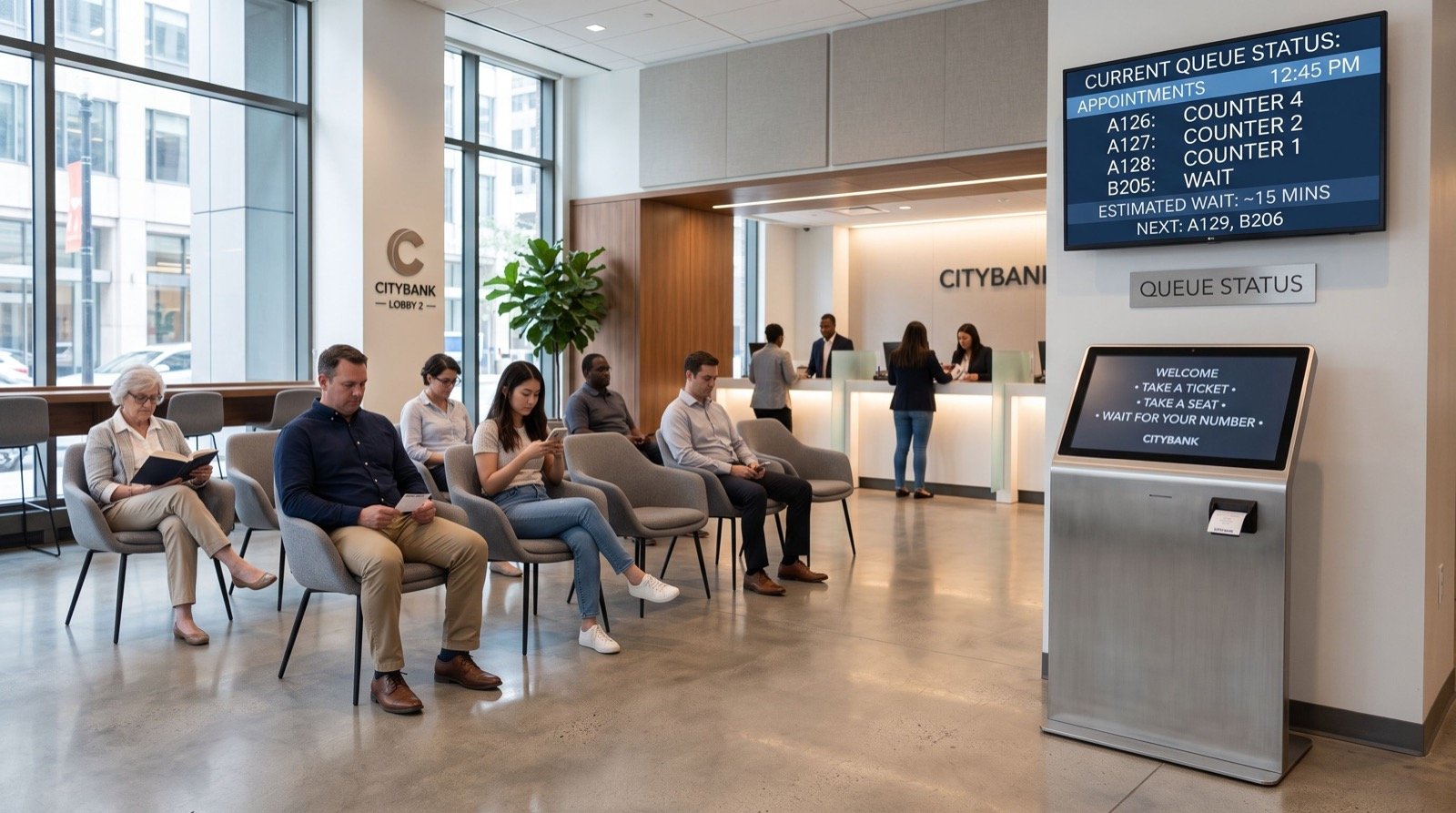
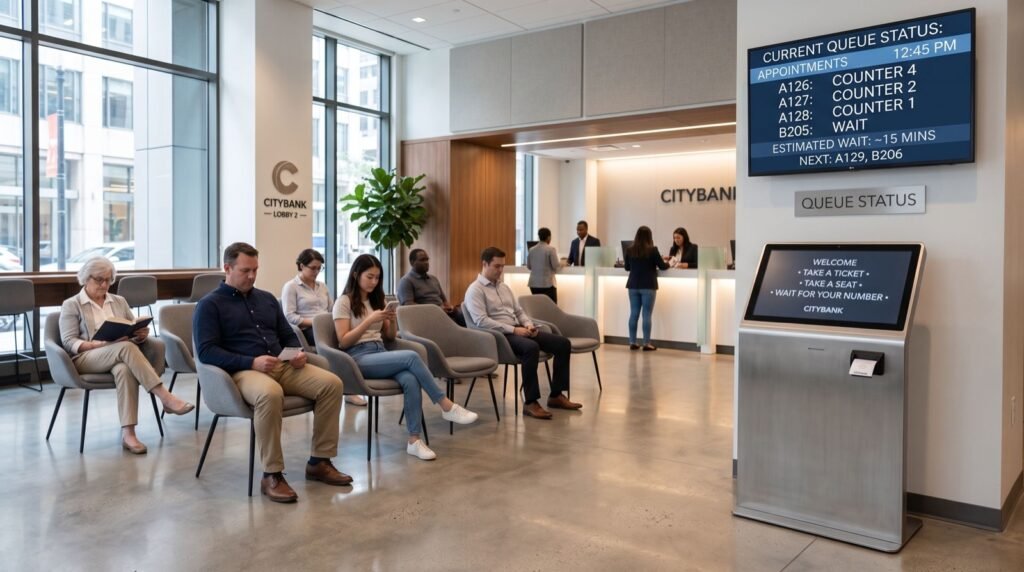
- The visitor arrives and selects a service on a kiosk, or scans a QR code with a phone.
- The system prints or sends a numbered ticket and shows the estimated wait.
- A display screen and voice announcement call the number when a counter is free.
- The agent presses “next” on a desktop or touch console and the visit is logged.
- Reports show waiting time, service time, no-shows and agent load.
Core hardware you will see
- Ticket kiosks, floor-standing or wall-mounted, with thermal printers.
- Counter displays and large main screens in Arabic and English.
- Agent keypads or software consoles.
- Optional feedback buttons for rating each visit.
Software features that matter
Look for bilingual Arabic and English interfaces, right-to-left layout support, multi-branch reporting, SMS or WhatsApp notifications, and appointment booking. A system that cannot speak your customers’ language will frustrate them, however good the hardware looks.
Which Features Should You Compare Before Buying?
Different sectors need different things. A hospital cares about priority for urgent cases. A bank wants separate flows for cash, loans and VIP clients. A government office wants strict audit logs. Use the table below as a starting checklist.
| Feature | Small branch | Bank or clinic | Large government site |
|---|---|---|---|
| Ticket kiosk | Single, basic | Touch, multi-service | Several, with priority lanes |
| Arabic and English display | Required | Required | Required |
| Mobile ticket and SMS | Nice to have | Strongly advised | Strongly advised |
| Appointment booking | Optional | Recommended | Essential |
| Analytics and reports | Basic | Per agent and service | Multi-branch, exportable |
| Integration with CRM or HIS | Rare | Common | Common |
What Does Implementation Look Like in Practice?
In our experience, the technology is the easy part. The hard part is mapping your real customer journey before you install anything. Spend one day standing in the waiting area with a stopwatch. Note when the rush starts, how many people leave without being served, and which service takes longest.
That small exercise often reveals a surprising fact: one slow service type, such as document renewal, may be blocking the whole line. The fix is a dedicated counter or a separate ticket category, not a bigger room.
A practical rollout plan
- Audit current waiting times for a week.
- Define service categories and priority rules.
- Choose hardware that matches your floor plan and ceiling heights.
- Train staff on the agent console before the go-live date.
- Place a greeter near the kiosk for the first two weeks.
- Review reports monthly and adjust counters.
Choosing reputable service experts for installation matters as much as the product itself, because a poorly positioned screen or a missed network cable can undermine a good system.
How Do Related Devices Fit Into the Same Project?
Queue systems rarely live alone. Branches usually add attendance terminals, barcode scanners and receipt printers at the same time. If you also manage staff access, it helps to know current Finger scanner devices prices in pakistan for comparison when you plan a regional rollout across several countries. Pricing varies with sensor type, capacity and software licensing, so request quotes with identical specifications.
Bundling devices from one supplier simplifies support and warranty, but check that each component uses open standards, so you are not locked in.
What Mistakes Should You Avoid?
- Ignoring the physical space. Kiosks placed behind the entrance door cause jams on day one.
- Skipping language support. Mixed Arabic and English screens need proper fonts and direction.
- No fallback plan. Keep a manual ticket roll for power or network outages.
- Never reading the reports. Data is the main long-term benefit.
- Overbuying features. Start with what you will use in the first year.
One original tip: set the display so that it shows the next three numbers, not just the current one. Customers relax when they can see progress, and perceived wait drops even when the real wait does not.
Frequently Asked Questions
How much does a queue management system cost in Saudi Arabia?
Prices range from a few thousand riyals for a single-counter starter set to six-figure budgets for multi-branch deployments. Hardware count, software licensing, customisation and annual support drive the total. Always compare quotes line by line.
How long does installation take?
A small branch can go live in one to three days. Larger sites with integrations may need two to six weeks, including testing and training.
Can customers take a ticket from their phone?
Yes. Most modern systems support QR-based remote tickets, so visitors can wait in their car or nearby cafe and return when called.
Does the system work in Arabic?
Good platforms support full Arabic interfaces, voice calls and right-to-left display. Confirm this during the demo, not after purchase.
Conclusion
A well-chosen queue management system in saudi arabia reduces frustration, lifts staff productivity and gives managers honest data in 2026. Map your journey, compare features with the table above, and pilot before scaling. Ready to plan your own deployment? Request a demo and quote from a trusted supplier today.